 US
US
Exhibition
- Home > News > Exhibition
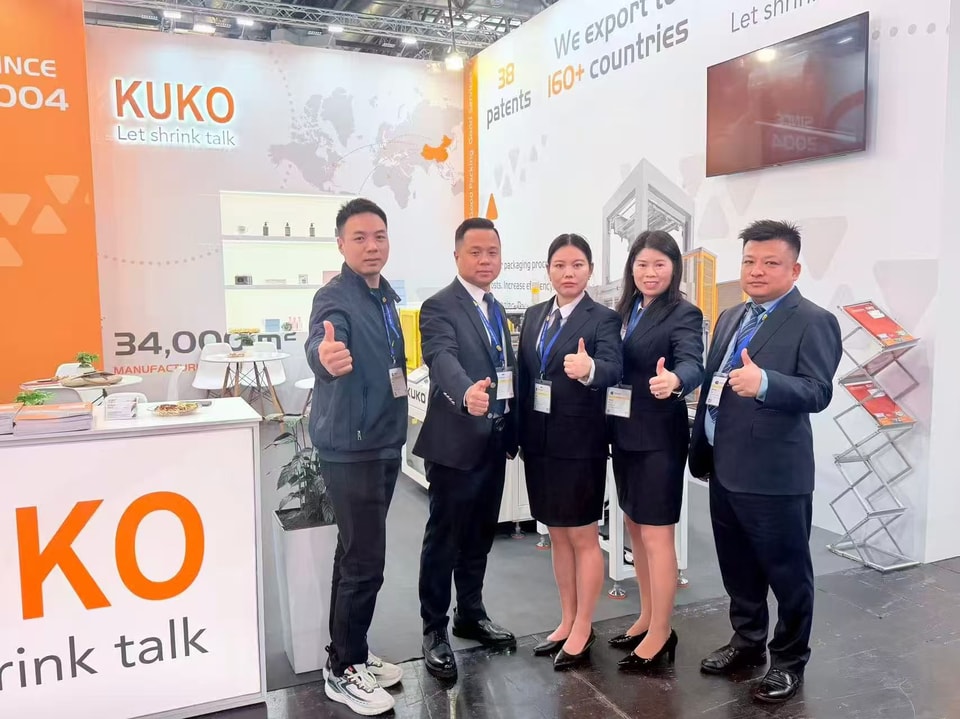
KUKO showcased industrial shrink packaging equipment and integrated packaging solutions at interpack 2026 in Düsseldorf, Germany. According to the interpack organizer's visitor information, the exhibition ran from 7 to 13 May 2026. KUKO's reported booth location was Hall 11, stand 11C75.Industrial shrink packaging applicationsThe exhibition display presented machinery and packaging-line approaches for products such as bottles, boxes and cans, serving food, beverage and other industrial packaging applications. Machine selection depends on product dimensions, film type, target throughput, integration requirements and the final line configuration. Buyers can compare side sealing equipment, sleeve sealing systems and shrink tunnels in KUKO's product catalogue.Company and booth informationKUKO's booth materials presented the brand slogan “Let shrink talk” and company-reported figures relating to its history, patents, international customer coverage and manufacturing area. These figures are company statements; buyers should check the relevant company profile and honors and certificates for current evidence and scope.During the exhibition, KUKO discussed product requirements and packaging-line configurations with visitors. Reported demonstration speed, accuracy or labor-saving figures depend on the exact model and test conditions and should be confirmed in a technical proposal rather than applied to all machines.Request equipment informationTo discuss a shrink packaging project, provide your product dimensions, weight, film material, throughput and intended line layout. Contact KUKO for a model-specific quotation.Exhibition: interpack 2026Dates: 7–13 May 2026Venue: Messe Düsseldorf, GermanyKUKO-reported stand: Hall 11, 11C75
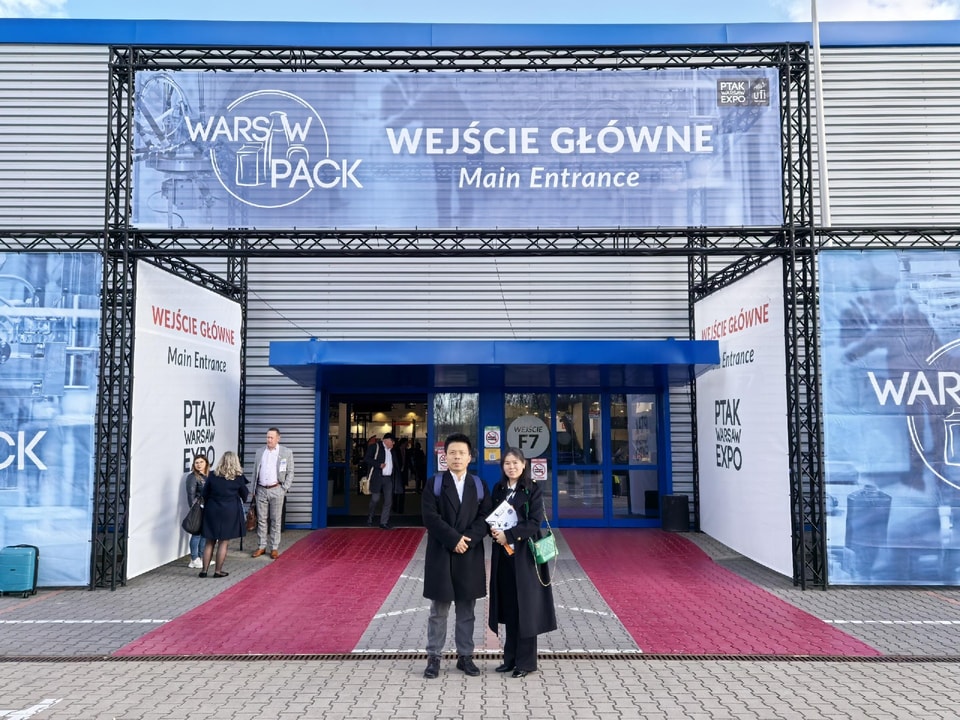
April 8-10, 2025 – KUKO participated in WARSAW PACK 2025, a leading packaging industry event certified by UFI, held at PTAK Warsaw Expo Center. The exhibition, covering over 14,000 sqm, gathered around 250 exhibitors and 10,800 professionals, serving as a key platform for industry exchange in Central Europe. KUKO showcased its latest film wrapping and shrink packaging machinery, featuring high efficiency, user-friendliness, stability and energy-saving performance. Highlights included a bag-making machine with fast mold change and precise size control, and a filling and sealing machine with high automation for diverse containers. The company also displayed innovative packaging products like cartons, glass and plastic containers, which combine product protection with enhanced brand image. KUKO’s booth attracted numerous visitors from various countries. Its professional team provided detailed product introductions, sparking strong interest and cooperation intentions. This participation not only demonstrated KUKO’s innovative strength but also boosted its international brand influence. By engaging with global industry peers, KUKO will continue to optimize its products and services, delivering high-quality packaging solutions to customers.From Exhibition Observation to a European Project Checklist A booth visit supports initial comparison. To make that time useful, bring representative product and packaging information, expected pack formats, desired line flow, and site constraints. During a demonstration, note the material used, product condition, operating sequence, operator actions, visible pack result, alarm handling, and access for adjustment or cleaning. Ask what would change for the buyer’s actual dimensions, containers, film, cartons, or production pattern instead of assuming the displayed setup transfers directly. Confirm the Site and Integration Basis For a European installation, the next discussion should be project specific. Confirm the destination, plant voltage and frequency, utilities, available footprint, conveyor levels, product direction, guarding interfaces, upstream and downstream signals, and plant rules that the supplier must receive. Identify applicable site requirements and assign who provides evidence for each. Any required declaration or assessment should refer to the final supplied configuration, not simply to equipment seen at the show. Close the Gaps in Writing Follow-up records can cover sample trials, agreed output definitions, format-change procedure, acceptance tests, manuals, drawings, spare and wear parts, software backups, training, installation, and service contacts. Assign responsibility for shipment preparation, site readiness, commissioning support, and correction of test issues. If technical claims were discussed verbally, request written confirmation with conditions and exclusions. Do not infer orders, customer reactions, or final suitability from exhibition presence. A checklist turns an initial conversation into a traceable review of whether the proposed solution, evidence, and support match the specific European packaging project.
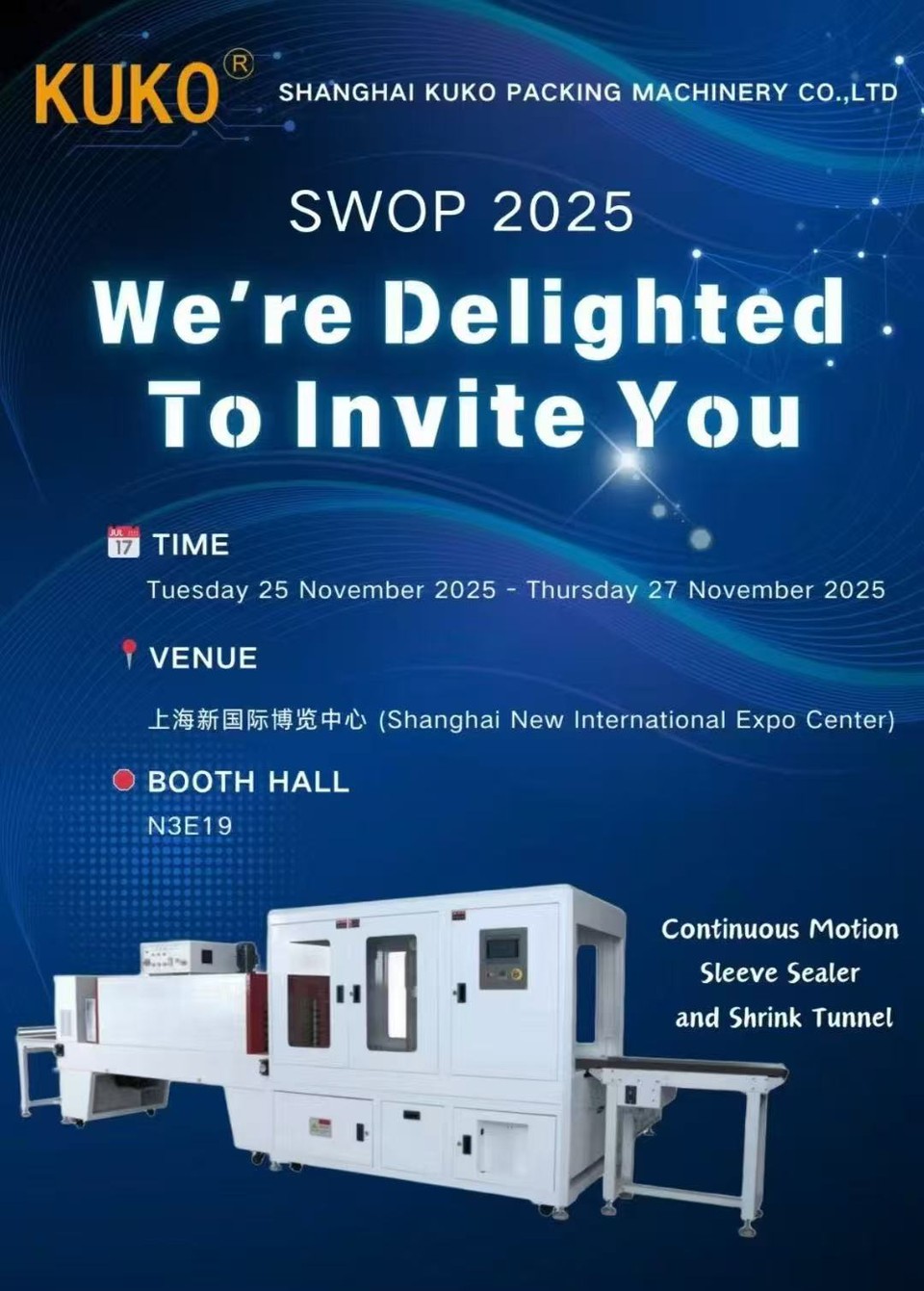
Shanghai, Nov 25, 2025 – KUKO presented its latest intelligent packaging equipment at SWOP 2025 held at Shanghai New International Expo Center (Booth N3E19) from Nov 25 to 27. As a leader in film wrapping and shrink packaging machinery, KUKO showcased high-speed, energy-efficient packaging solutions suitable for food, daily chemicals and pharmaceuticals, demonstrating its strengths in automated, green packaging. As a benchmark packaging exhibition in Asia, SWOP gathers global industry innovations. KUKO’s team offered on-site demos and interactive experiences at the booth, aiming to connect with domestic and international partners, explore industry trends and enhance its global footprint. "SWOP 2025 is key to KUKO’s global expansion," said Mr. Bi, head of KUKO. "We’re eager to showcase our innovative manufacturing capabilities, learn from global peers and create greater value for customers. We sincerely invite all industry participants to visit Booth N3E19 and witness KUKO’s technological innovations driving the industry forward!"Turning a Trade-Show Demonstration into a Useful Evaluation An exhibition run starts technical discussion, but should be observed against a defined sample and operating scenario. Visitors can record the product dimensions, film type and thickness, pack pattern, output, and the quality standard. Beyond a short stable sequence, ask how startup, stopping, film replacement, product gaps, and routine adjustments are handled. If different products are relevant, discuss which parts, settings, guides, or tools change and how changeover time would be measured during a later trial. Questions for Line Fit and Daily Operation For an automated packaging project, the machine cannot be evaluated in isolation. Buyers should map upstream product delivery and downstream discharge, including conveyor height, product orientation, accumulation logic, line speed signals, emergency-stop links, guarding boundaries, utilities, and available floor space. Ask which interface information can be supplied for engineering review and which assumptions still depend on the buyer’s site. Maintenance discussions should cover access for cleaning and inspection, wear-part identification, lubrication points, alarms, troubleshooting guidance, operator skill expectations, and the recommended spare-parts basis for the intended duty. Confirm After the Show Notes from the booth should become a written technical question list rather than an immediate performance conclusion. Request confirmation of the proposed configuration, sample responsibility, test method, acceptance criteria, interface ownership, documentation, training, installation support, and open technical risks. Any speed discussed should be tied to the actual product, film, pack format, and test conditions. A follow-up trial can then compare results consistently and document deviations. This disciplined sequence helps separate what was visible during the demonstration from what must still be engineered, tested, and agreed for the production line.


let shrink talk