 US
US
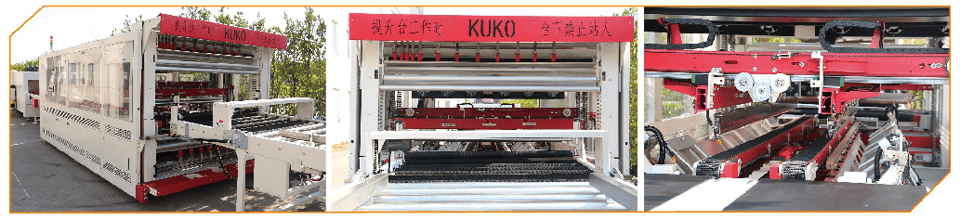
KUKO Establishes Strategic Partnership with SIEMENS
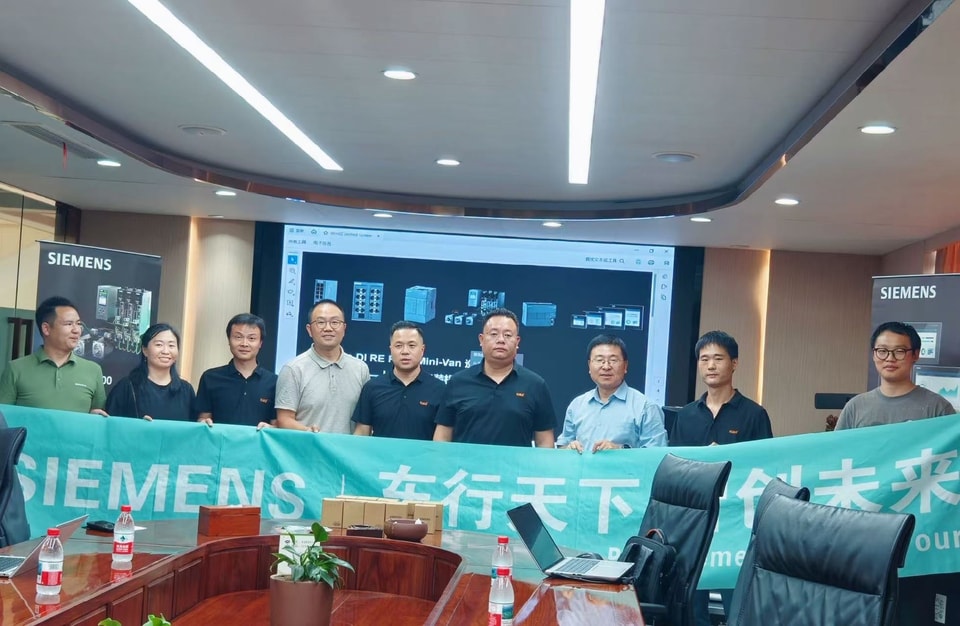
KUKO Establishes Strategic Partnership with SIEMENS
July 7, 2025 – KUKO and SIEMENS officially entered into a strategic partnership to conduct in-depth cooperation in the intelligent packaging machinery field, jointly driving technological innovation and industrial upgrading in the industry.
At the signing ceremony, members of KUKO's mechanical intelligence team and representatives from SIEMENS gathered together to witness this important moment. The two teams took a group photo in front of the cooperation banner, marking the official launch of the partnership.
According to the strategic cooperation agreement, KUKO will leverage SIEMENS' advanced technologies and rich experience in industrial automation, digital solutions and intelligent manufacturing to further enhance the intelligence level of its packaging machinery products. SIEMENS will provide a variety of technical support including automation control systems and digital factory solutions to help KUKO optimize production processes and improve efficiency.
SIEMENS stated that this cooperation is an important step in promoting its intelligent manufacturing strategy in the Chinese market. Through cooperation with KUKO, SIEMENS will further expand its application scenarios in the packaging machinery industry and help more enterprises achieve digital transformation.
Evaluating the Automation Solution Behind the Partnership
The partnership described above provides a basis for discussing automation control and digital solutions, but each packaging project still needs a defined technical architecture. Buyers can request a control overview showing the main controllers, operator interface, drives, sensors, networks, and data connections included in the offered configuration. It should identify which interfaces connect to upstream equipment, downstream equipment, plant supervision, or other systems. Signal lists, communication methods, data ownership, and boundaries of supply should be reviewed.
Safety, Versions, and Lifecycle Questions
Control evaluation should also cover the safety concept, including protective devices, emergency functions, reset behavior, operating modes, and responsibility for validating the integrated line. Buyers may ask how hardware and software versions are recorded, how backups are created and restored, who can modify parameters, and how changes will be approved. A component list can support discussion of local availability, critical spares, substitution rules, obsolescence handling, and the effect of a replacement on software or drawings.
Make Commissioning Responsibility Explicit
Before commissioning, define who provides power, network access, products, packaging material, interface counterparts, test personnel, and safe site conditions. The parties should agree who loads software, checks signals, tunes motion, runs acceptance tests, records deviations, and authorizes final versions. Training, manuals, source and backup files where contractually applicable, remote-support arrangements, and post-startup issue handling should be listed rather than assumed. This project-level review does not expand the stated partnership; it helps a buyer determine how the described automation capabilities will be translated into a maintainable, testable, and clearly documented packaging solution.


let shrink talk